

In Part I of this series, I discussed how the philosophical underpinnings of conservatism instruct our relationship with the natural world we live in. In short, it concludes that the dictates of conservative thought require us to recognize and fulfill, as Margaret Thatcher put it, “our duty to nature.”
But what does fulfilling that duty look like? What kind of policies should we be supporting?
From Biblical teaching to the words of our nation’s founding fathers, one key recognition is the fallibility of mankind and the moral imperative to rise above our worst impulses.
It’s probably no accident that pride and greed top the list of Seven Deadly Sins outlined by St. Gregory the Great and St. Thomas Aquinas.
Edmund Burke (the father of modern conservatism) understood this as well. He pointed out that, “The great Error of our Nature is, not to know where to stop, not to be satisfied with any reasonable Acquirement; not to compound with our Condition; but to lose all we have gained by an insatiable Pursuit after more.”
It is that greed-driven “insatiable Pursuit after more” that most often comes in conflict with our duty to nature, which we can only accomplish by balancing our needs with those of maintaining a “living and thriving planet” for both current and future generations.
The Past is Prologue
We’ve seen many examples of this throughout history. Between 1880 and 1930, logging wiped out practically every tree in West Virginia. Such excessive logging prompted Theodore Roosevelt to create the National Forest System and establish standards in forest management.
Roosevelt created our first wildlife refuge on Pelican Island in Florida because bird species were being driven to extinction by the hat trade’s demand for feathers. We also drove bison to near extinction, along with wolves and grizzly bears in the lower 48.
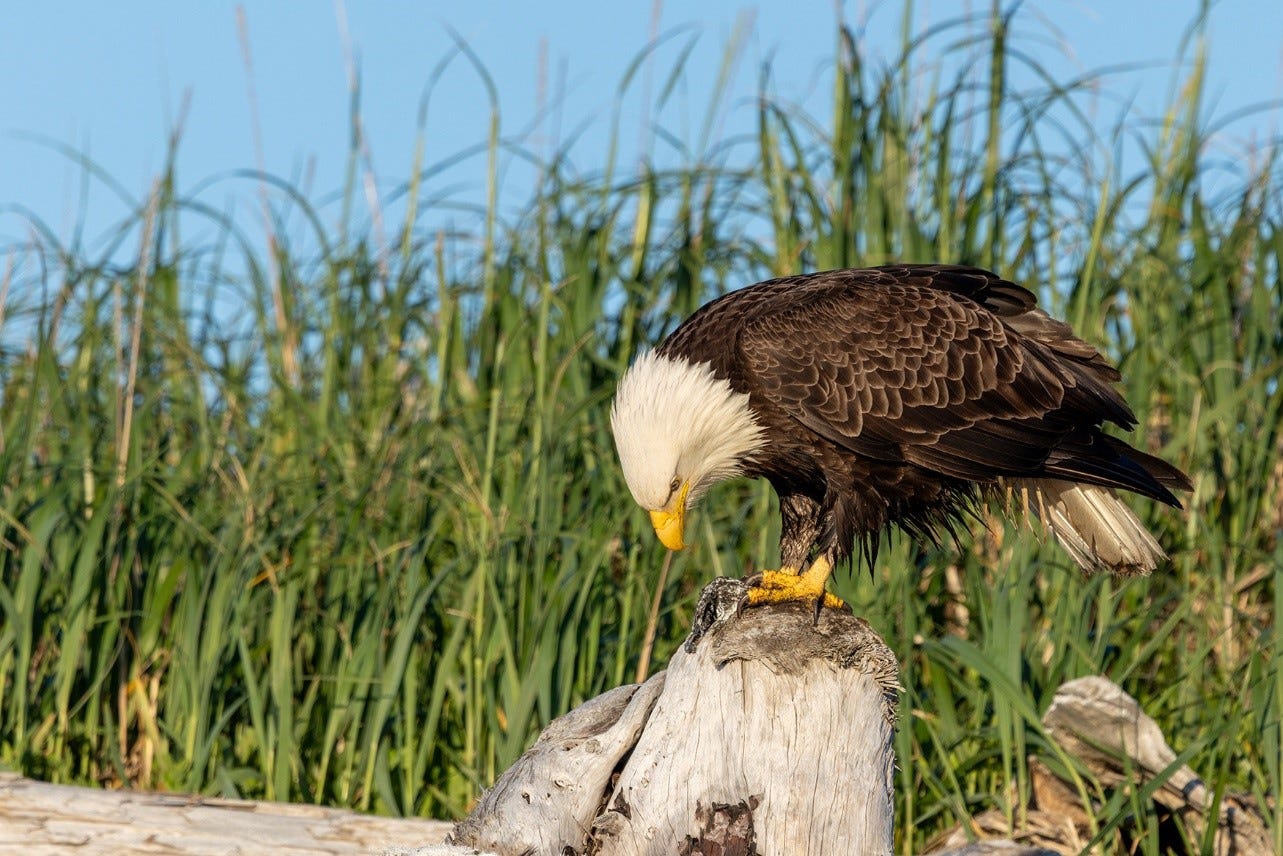
Pollution was so rampant in the 1960s that cities were choked by smog, Ohio’s Cuyahoga River caught on fire numerous times, every square yard of Lake Erie was writhing with more than 30,000 sludge worms due to all the raw sewage being dumped there, and our national bird, the bald eagle, was on the verge of extinction.
Russell Kirk, whom President Reagan dubbed “the prophet of American conservatism,” lived through the 1950s and 60s and lamented such degradation (and lack of fiscal restraint), saying:
“The modern spectacle of vanished forests and eroded lands, wasted petroleum and ruthless mining, national debts recklessly increased until they are repudiated, and continual revision of positive law, is evidence of what an age without veneration does to itself and its successors.”
A Conservative Response
The unsustainable damage being wreaked upon our natural environment is what prompted President Richard Nixon to create the Environmental Protection Agency, and Congress to pass — with almost unanimous bi-partisan support — the Clean Air Act, Clean Water Act, Endangered Species Act, and a number of other landmark environmental laws.
Burke would have no doubt applauded those laws as common-sense checks on human nature. In a 1791 letter to the French National Assembly, he pointed out that “Society cannot exist unless a controlling power upon will and appetite be placed somewhere, and the less of it there be within the more there must be without.”
The “within” Burke refers to is individual self-discipline, the “without” is societal (government) regulation. He is stating an important corollary: that the less self-discipline we exhibit as individuals to do the right thing, the more rules and regulations need to be imposed by society — and vice versa.
Today, a constant refrain we hear from the political right and certain corporate/business interests is that we need less government regulation. More often than not, what that really means is that they want free reign to do as they please.

History has shown time and again that when people have free reign to do as they please in their “insatiable Pursuit after more” our life-sustaining natural environment suffers, along with the prospects of future generations.
It follows then, that having laws and regulatory guardrails that safeguard our natural environment are not only essential, they are, in fact, conservative.
As Kirk pointed out in his 1996 book Redeeming the Time, “Every right is married to a duty, every freedom owes a corresponding responsibility.”
This doesn’t mean that all regulation is appropriate. We do see examples of bureaucratic creep that results in overly burdensome and redundant regulation.
As conservatives, our goal should always be a government and regulatory regime that is lean, efficient, and effective. When regulatory reform is warranted, as it often is, the reforms we seek cannot omit the “effective” part. For guardrails to work, they must be real.
Meeting the Challenge
Conservatives have a long history of championing environment and natural resource protection.
The near unanimous passage of the nation’s landmark environmental laws back in the 1970s were not passed over the objections of conservatives; they were passed with conservatives leading the way.
For example, the Clean Air Act of 1970 passed the U.S. House 375 to 1, and the U.S. Senate 73-0. Voting in favor were conservative stalwarts like Barry Goldwater. The single no vote was from Congressman Leonard Farbstein, a Democrat from New York.
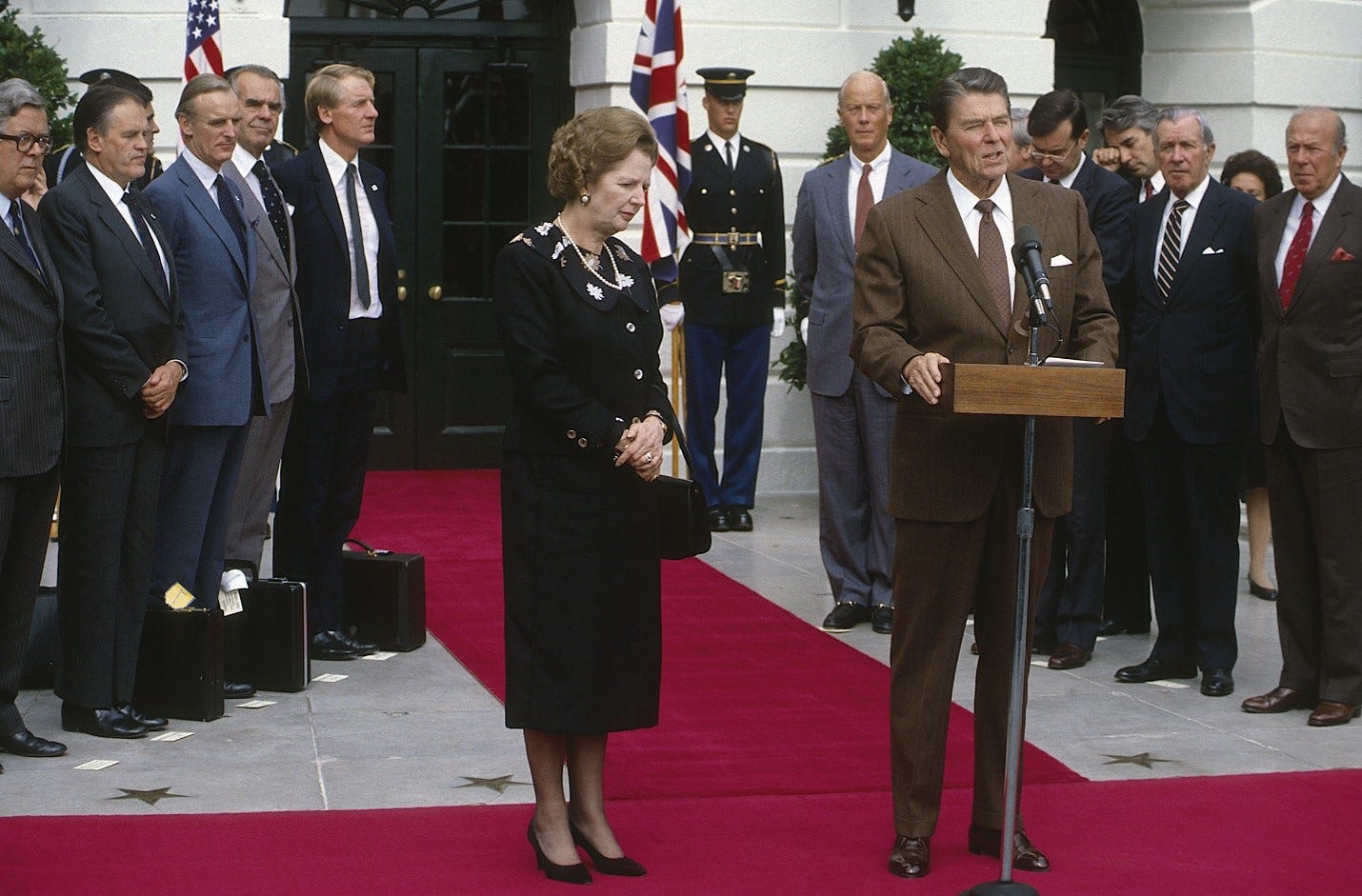
Ronald Reagan, once he became president, took to the radio to tout his role (as Governor of California) in pushing the Nixon administration to address the air pollution issue. And as we noted in part I, he followed that up by pushing through the Montreal Protocol treaty to successfully tackle ozone depletion.
Conservatives were also instrumental in passage of key public land protections. The Wilderness Act and the Wild and Scenic Rivers Act both owe their creation and passage to a conservative congressman from Pennsylvania, John Saylor.
That is what fulfilling our duty to nature looks like.
It’s making sure that we balance development with preservation, that we constantly strive to minimize our adverse impacts on the natural environment, use our resources wisely, not wastefully, and never subordinate our stewardship obligation to greed or short-term gain.
As President Reagan once reminded us, “What is a conservative after all but one who conserves.”